Santa Clarita's Master Woodcrafter: Custom Furniture Artisan Albert Edijou
For more than 47 years, Albert Edijou has practiced a form of fine woodworking expertise that most of the world has never seen in person. As a European Master Craftsman and the 1990 first-prize winner among 384,000 masters competing in Germany, Albert brings a standard of bespoke furniture making to Southern California that is grounded in historical technique, material purity, and a strict one-of-one philosophy. Every commission produced at Edijou Woodmaster in Santa Clarita is a singular creation, built entirely from solid natural wood, finished with crystal-clear non-toxic polyurethane, and installed personally by Albert himself. No MDF. No composite boards. No machine-automated shortcuts. Just the handcrafted wood artisan tradition of a dying European craft, brought to the homes and boardrooms of Los Angeles.
European Mastery, California Craftsmanship
A Legacy Built on 47 Years of Fine Woodworking Expertise
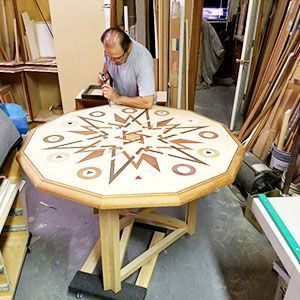
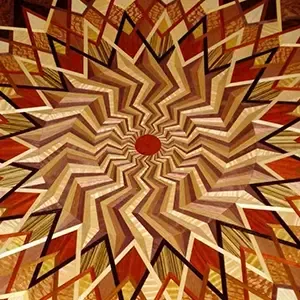
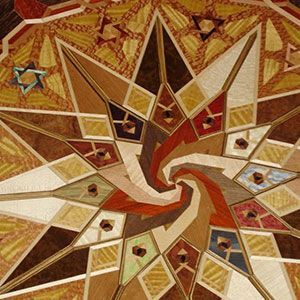
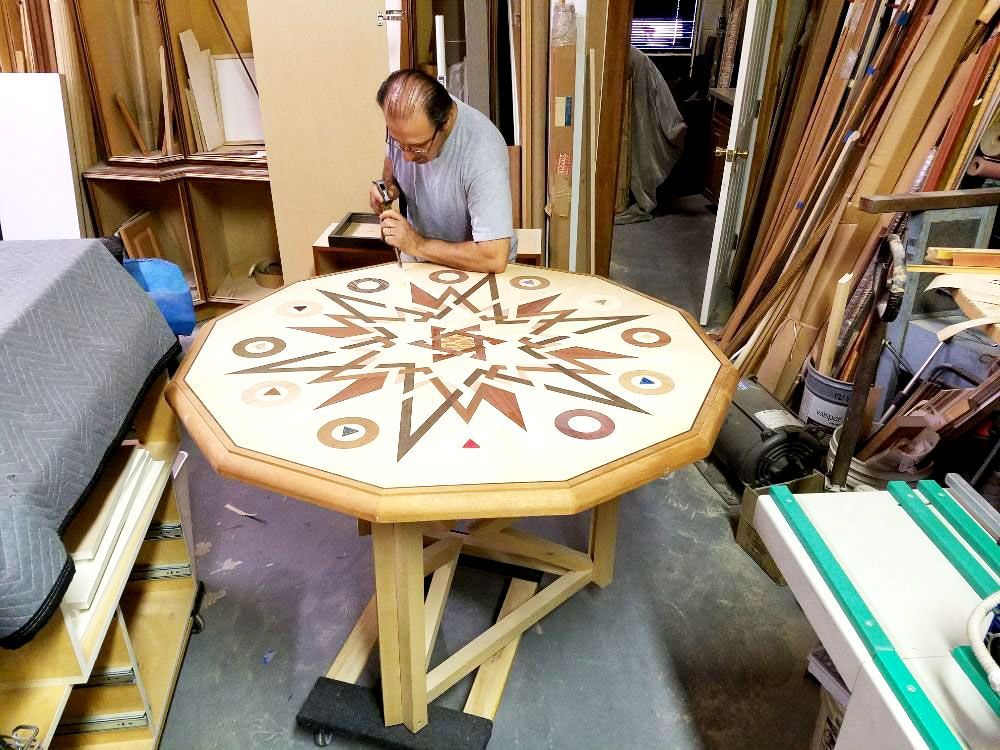
Albert Edijou established Edijou Woodmaster in 2000, registering the business in 2002 and relocating to Valencia in the Santa Clarita Valley in 2004. His credentials trace back to a European tradition that predates modern manufacturing by centuries. Albert is one of fewer than ten practitioners per country in France, England, and Germany who still practice the rare 14th-century hand-inlay technique known as marquetry and intarsia. Each inlay commission involves between 2,000 and 5,000 or more individual solid wood pieces, with all color variation achieved strictly through the natural properties of the wood species selected, never through artificial stains or dyes. His pieces are held in European museums and recognized as examples of historical artisanship at its highest level. Albert is also a member of the Tree Art Academy and possesses the rare ability to read and write seven alphabets, allowing him to weave biblical narratives, ancient scripts, and personalized family records directly into the wood grain of a commissioned piece.
47+
Master Craftsmanship
The One-of-One Standard
What Sets a Custom Cabinetry Craftsman Apart from Every Other Builder
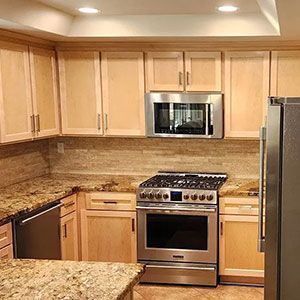
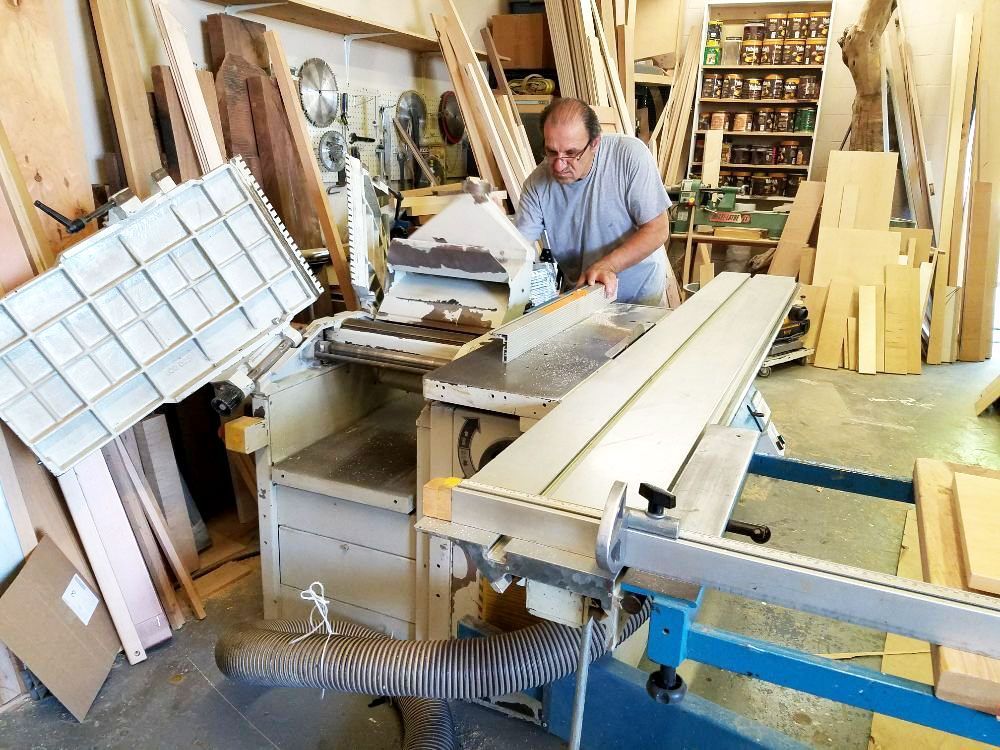
The luxury millwork market is filled with products that look premium but are built on a foundation of MDF, particle board, and Chinese aftermarket hardware. Edijou Woodmaster exists as the direct rejection of that model. Albert uses only 100% solid natural wood and green-tagged solid plywood, finished with non-acid, non-toxic polyurethane coatings that protect the health of every person in the home long after installation. All functional hardware is 100% German-manufactured, chosen for heavy-duty durability and the kind of tactile quality that high-end clients notice every single day. Albert personally calculates historical proportions for every project, drawing from Baroque, Renaissance, Rococo, and contemporary architectural styles to ensure each commission achieves a precise stylistic match with the existing space. There are no third-party designers, no intermediary installers, and no version of a piece that looks like something else. Albert measures, designs, builds, and installs each commission himself, serving clients in Beverly Hills, Bel Air, Brentwood, Westwood, Calabasas, Westlake Village, and the greater Santa Clarita area.
Common Questions About Edijou Woodmaster
What People Ask About Edijou Woodmaster
How many years of experience does Albert Edijou have as a woodworking craftsman?
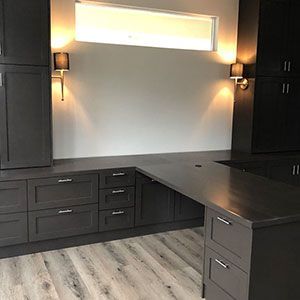
Albert Edijou has more than 47 years of experience as a master craftsman. His credentials include formal European master-level training and a first-prize finish in 1990 among 384,000 masters competing in Germany. His work spans custom kitchen and architectural cabinetry, executive furniture, historical wood inlays using 14th-century marquetry and intarsia techniques, custom wall sculptures, and family heirloom art pieces. He is a member of the Tree Art Academy, and pieces from his portfolio are held in European museums.Why does Edijou Woodmaster refuse to use MDF or particle board in any commission?
MDF, particle board, and other composite materials are known to off-gas toxic chemicals and volatile organic compounds over time, creating health risks for everyone living or working in the space. Albert uses only 100% solid natural wood and green-tagged solid plywood in every commission, finished with crystal-clear, non-acid, non-toxic polyurethane coatings. This material standard is a non-negotiable part of every project, not an optional upgrade, and it applies equally to residential cabinetry, executive furniture, and sculptural art pieces.What does the single-artisan process mean for a client commissioning a piece?
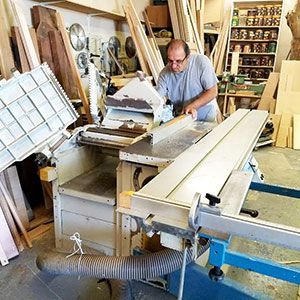
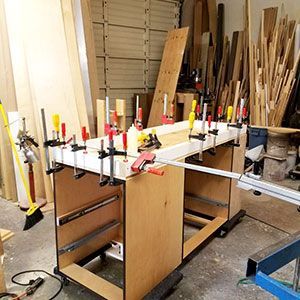
Albert Edijou is the only person who touches your commission from start to finish. He conducts the initial consultation, travels to the site for personal measurements, calculates all historical proportions himself without relying on third-party designers, builds the piece entirely by hand in his Santa Clarita workshop, and then installs it personally. There are no subcontractors, no outsourced installation crews, and no scenario where the person who designed the piece is different from the person who delivers it. This approach eliminates the quality drops and communication errors that commonly occur when multiple vendors are involved.What is marquetry, and how does it differ from machine-made wood art?
Marquetry is a centuries-old hand-inlay technique in which hundreds or thousands of individually cut pieces of natural wood are fitted together to form images, patterns, or narratives. Albert practices a rare 14th-century version of this technique, assembling between 2,000 and 5,000 or more individual solid wood pieces per commission. All color variation comes from the natural properties of the wood species selected, including exotic burls such as walnut burl and olive burl, with no artificial stains, dyes, or paints used. Machine-automated production cannot replicate the precision or depth of this process.Can Albert incorporate personalized text or family history into a wood art commission?
Yes. Albert has the rare ability to read and write seven alphabets, which allows him to integrate ancient scripts, biblical narratives, family names, birth dates, wedding dates, and other personal records directly into the wood grain of a commissioned piece. This capability is most commonly applied to Tree of Life family heirloom art pieces and custom wall sculptures, but it can be incorporated into other commission types as well. The result is a one-of-one piece that functions as a permanent, multi-generational record of family history.Which areas of Los Angeles does Edijou Woodmaster serve?
Edijou Woodmaster is based in Santa Clarita, California, and serves clients throughout the greater Los Angeles area, including Beverly Hills, Bel Air, Brentwood, Westwood, Calabasas, and Westlake Village. Albert travels personally to each client's location for on-site measurement and final installation, so the service area reflects the geographic range of his active commissions rather than a fixed showroom footprint.What types of hardware does Albert use, and why does the choice matter?
All functional hardware used in Edijou Woodmaster commissions is 100% German-manufactured. Albert does not use Chinese or aftermarket hardware under any circumstances. German-manufactured hardware is chosen for its heavy-duty durability, precision engineering, and premium tactile performance in high-traffic furniture and cabinetry. For clients commissioning pieces valued at $15,000 or more, the quality of the hardware is a daily, tangible part of the experience, and inferior hardware would undermine the integrity of an otherwise museum-quality commission.Does Edijou Woodmaster repair or refinish cabinets made by other builders?
No. Edijou Woodmaster does not repair, refinish, or modify cabinetry or furniture produced by third parties. Albert's practice is focused exclusively on original commissions built entirely from scratch to each client's specifications. He also does not install prefabricated or modular cabinet units sourced from other manufacturers. Every project that leaves the Santa Clarita workshop is a one-of-one creation, built from raw solid natural wood and delivered as a complete, finished piece.