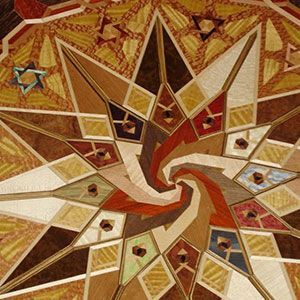
Handcrafted Historical Wood Inlays: Marquetry and Intarsia by a European Master
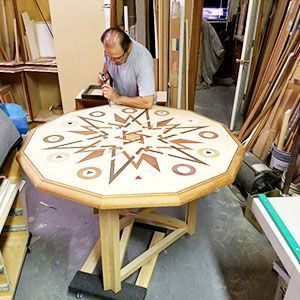
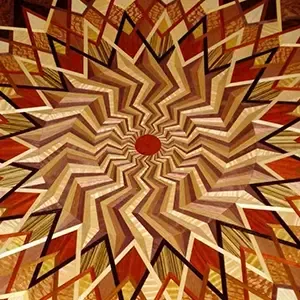
Albert Edijou brings a rare 14th-century wood inlay method to clients across Santa Clarita, Beverly Hills, Bel Air, and the greater Los Angeles area. Each commission is a one-of-a-kind creation built from 2,000 to 5,000 or more individual solid wood pieces, assembled entirely by hand using traditional marquetry and intarsia work. No artificial stains, no machine automation, no duplicates. Every color in the finished piece comes from the natural variation of the wood species themselves, including exotic burls like walnut and olive. This is fine wood inlay artistry practiced by fewer than ten masters per country in Europe, now available for private estates, corporate boardrooms, and legacy commissions in Southern California.
Santa Clarita and Los Angeles
A Traditional Wood Inlay Technique That Has Survived Seven Centuries
The 14th-century wood inlay method Albert practices was developed in the workshops of European masters long before machine production existed. It requires the selection, shaping, and placement of thousands of individual wood pieces, each chosen for its natural color and grain rather than dyed or stained to match. The result is a composition that holds its visual integrity for generations, because no artificial pigment can fade or peel. Albert won 1st Prize among 384,000 master craftsmen in Germany in 1990, and his inlay work has been recognized by European museums. When you commission a piece through Edijou Woodmaster, you work directly with the artisan from the first measurement to the final hand-installation.


Marquetry and Intarsia Work
What Goes Into Each Inlay Commission
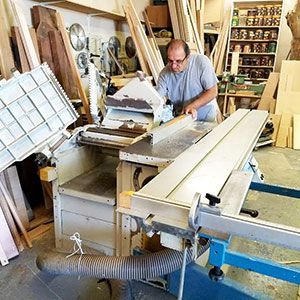
Every inlay project begins with a detailed consultation where Albert reviews the client's vision, the architecture of the space, and any historical or personal narratives to be woven into the piece. He personally calculates the proportions and layout, drawing on his command of historical styles from Baroque and Renaissance to Rococo, and his ability to read and write seven ancient alphabets. The wood species are then sourced from hundreds of natural varieties, including rare exotic burls, and each piece is cut and placed by hand. Zero machine automation is used at any stage of the inlay process. Finished surfaces are sealed with crystal-clear, non-acid, non-toxic polyurethane coatings, protecting both the piece and the health of everyone in the home. No MDF, no particle board, and no composite materials are ever used.
Applications for Fine Wood Inlay Artistry
From Discussion Tables to Legacy Wall Art in Beverly Hills and Beyond
Albert's inlay commissions serve a wide range of purposes for high-net-worth residential and corporate clients. Custom discussion tables for executive boardrooms can incorporate a company's founding narrative or brand history directly into the wood grain, using up to 5,000 individual pieces. Residential clients in Bel Air, Brentwood, Westwood, Calabasas, and Westlake Village commission inlay wall art, Tree of Life compositions with family names and dates, and heirloom pieces inscribed in ancient alphabets. Corporate suites in Beverly Hills have received bespoke inlay logos and historical motifs that no machine-produced alternative can replicate. Each piece ranges from intimate 1x2 foot formats to large 4x8 foot commissions, and every one is installed personally by Albert.


Material Standards and Health Safety
Zero Compromise on Materials: Solid Wood, Non-Toxic Finishes, German Hardware
Every inlay commission from Edijou Woodmaster is built on a foundation of 100% solid natural wood and green-tagged solid plywood. The finishing process uses only crystal-clear, non-toxic polyurethane coatings that produce no acid smell and no chemical off-gassing after installation. This matters especially in residential settings where families live with the piece daily. All functional hardware used in any accompanying cabinetry or furniture elements is 100% German-manufactured, chosen for its heavy-duty durability and premium tactile performance. No Chinese or aftermarket hardware is used at any stage. The result is a commission that is as safe for your home as it is rare in its craftsmanship.
Your Questions Answered
Common Questions About Wood Inlay Commissions
What is the difference between marquetry and intarsia, and which does Albert use?
Marquetry involves assembling thin veneers of wood into decorative patterns or pictures on a flat surface, while intarsia is a technique of inlaying solid pieces of wood into a recessed background to create a mosaic-like composition with more depth and dimension. Albert practices both techniques, drawing on the rare 14th-century hand-inlay method that predates modern machine production. His work uses 2,000 to 5,000 or more individual pieces per commission, with all color variation achieved through the natural properties of different wood species rather than any artificial stain or dye.Are artificial stains or dyes used to achieve colors in the inlay work?
No artificial stains, dyes, or paints are ever used to achieve color in an Edijou Woodmaster inlay. All color variation comes strictly from the natural properties of the wood species selected for each commission. Albert sources from hundreds of natural wood varieties, including exotic burls such as walnut burl and olive burl, each chosen for its specific grain and tone. This approach ensures the colors remain stable and true for generations, since there is no pigment to fade, peel, or discolor over time.Can an inlay piece incorporate personal family history, names, or dates?
Yes. Albert's ability to read and write seven ancient alphabets is a core capability of his heirloom and legacy commissions. Pieces can incorporate birth dates, wedding dates, family names, biblical narratives, and personal histories woven directly into the wood grain. Tree of Life compositions are a signature format for this kind of personalized work. These commissions are designed to function as multi-generational records, comparable in permanence and personal significance to fine jewelry, and are available for residential clients across Beverly Hills, Bel Air, Brentwood, Calabasas, and Westlake Village.Can a corporate boardroom table include a company's brand history or logo as an inlay?
Yes. Albert has created custom discussion tables for executive boardrooms that weave a company's founding narrative, brand timeline, or logo directly into the surface using the traditional hand-inlay process. These pieces serve as both functional conference tables and permanent records of corporate identity. The commission process begins with a detailed consultation to understand the brand's history and the architectural style of the existing space, ensuring the finished piece coordinates with the room's decor and proportions.What materials are used, and are the finishes safe for a home with children or chemical sensitivities?
Every inlay commission is built using 100% solid natural wood and green-tagged solid plywood. No MDF, particle board, or composite materials are used at any stage. The finishing process relies exclusively on crystal-clear, non-acid, non-toxic polyurethane coatings that produce no chemical off-gassing or acid smell after installation. This makes the work well suited for residential environments where health and air quality are a priority, including homes with children or individuals with chemical sensitivities.Does Albert personally install the finished inlay piece, or is a third-party installer used?
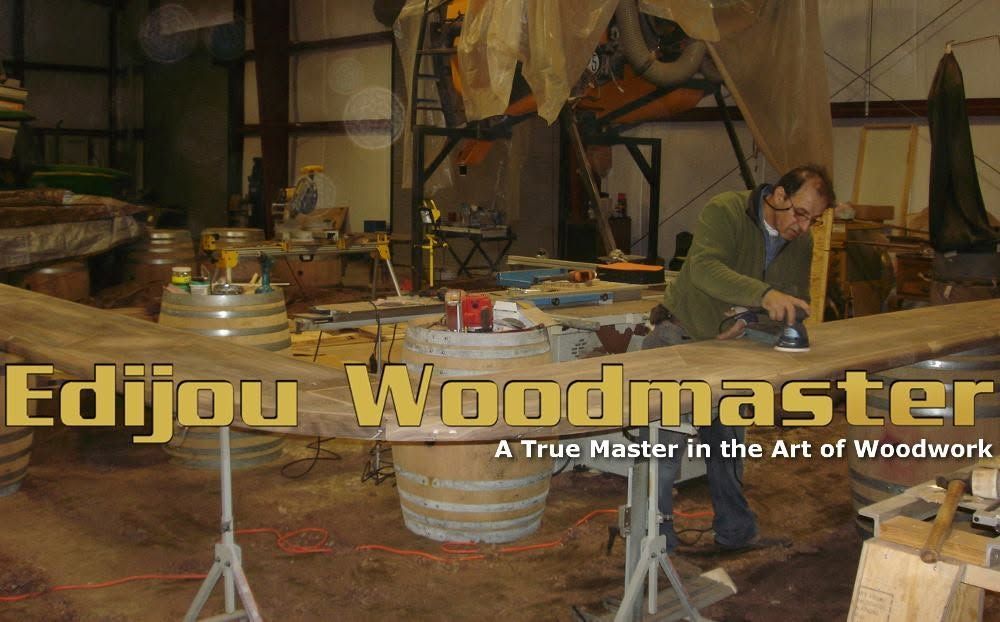
Albert personally installs every commission himself. Edijou Woodmaster operates on a single-artisan touchpoint model, meaning the same master craftsman who designs and builds the piece is the one who arrives on-site to install it. This eliminates the quality inconsistencies and additional fees that can come with third-party installers, and it ensures that the proportions, fit, and finish meet the same standard as the workshop build. Personal installation is included as part of the commission process for clients across Santa Clarita, Beverly Hills, Bel Air, and the surrounding Los Angeles area.How does Albert's knowledge of historical proportions affect the design of a commission?
Albert personally calculates the exact historical proportions for every commission, drawing on his deep knowledge of period styles including Baroque, Renaissance, and Rococo. This means the scale, framing, and compositional balance of each inlay is designed to work in harmony with the existing architecture of the room, not imposed on it. This capability removes the need for a separate third-party designer, which reduces both cost and the risk of miscommunication between the client's vision and the final result.How many individual wood pieces typically go into a single commission, and what sizes are available?
Each commission typically contains between 2,000 and 5,000 or more individual solid wood pieces, depending on the size and complexity of the design. Pieces range from 1x2 feet up to large 4x8 foot compositions. Every piece is cut and placed entirely by hand, with no machine automation at any stage. The density and precision of this work is what gives each commission its visual depth and ensures it cannot be replicated by machine-based alternatives.
New Paragraph
Clients Across Los Angeles and Santa Clarita